
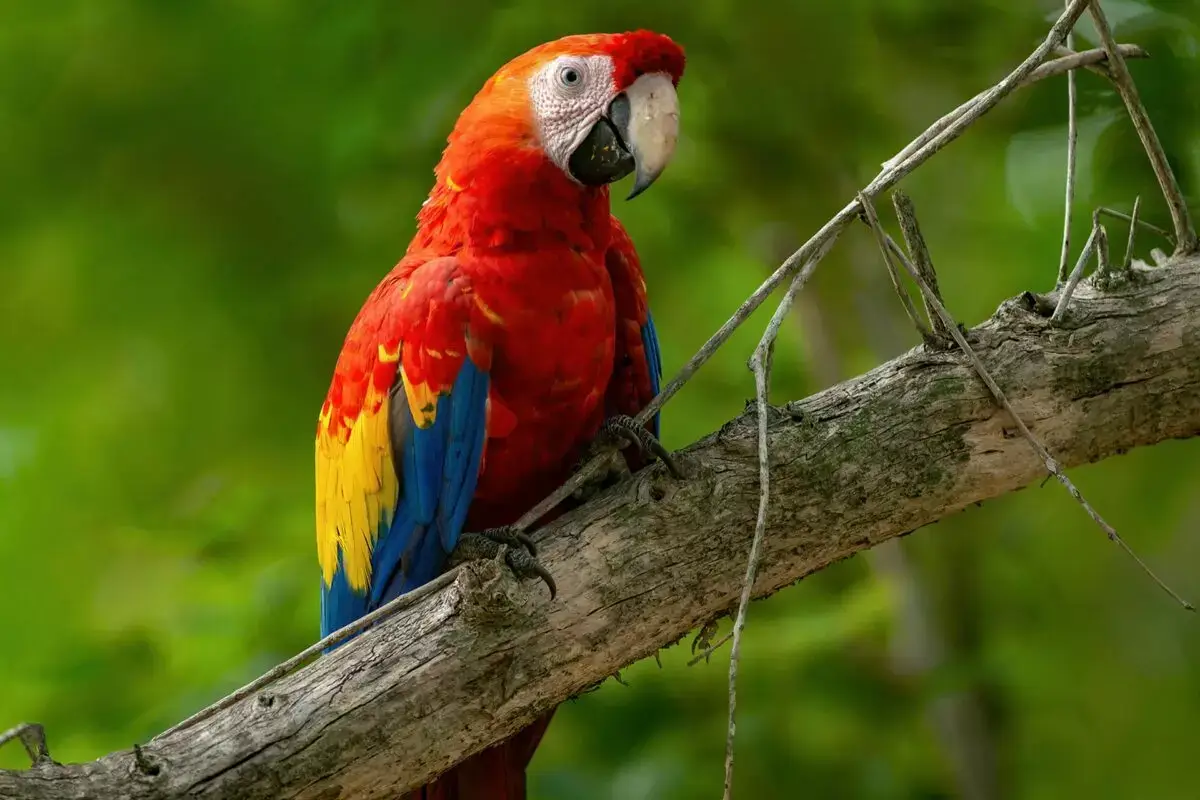
The Scarlet Macaw is a species with diurnal habits, and it is very social, often forming flocks of several dozen individuals. These flocks gather to forage, groom, protect each other, and sleep together. Its diet is predominantly made up of seeds, but it also includes fruits, nectar, insects, flowers, leaves, and stems from certain plants. They supplement their diet with minerals that help counteract some toxins found in their food, which are difficult for them to digest and toxic to humans.
The Scarlet Macaw inhabits a variety of ecosystems, including medium sub-deciduous forests, tall sub-evergreen forests, lowland tropical rainforests, open forests, wet plains, and savannas. It can be found in both mountainous areas and coastal regions near the Pacific and Atlantic oceans.