
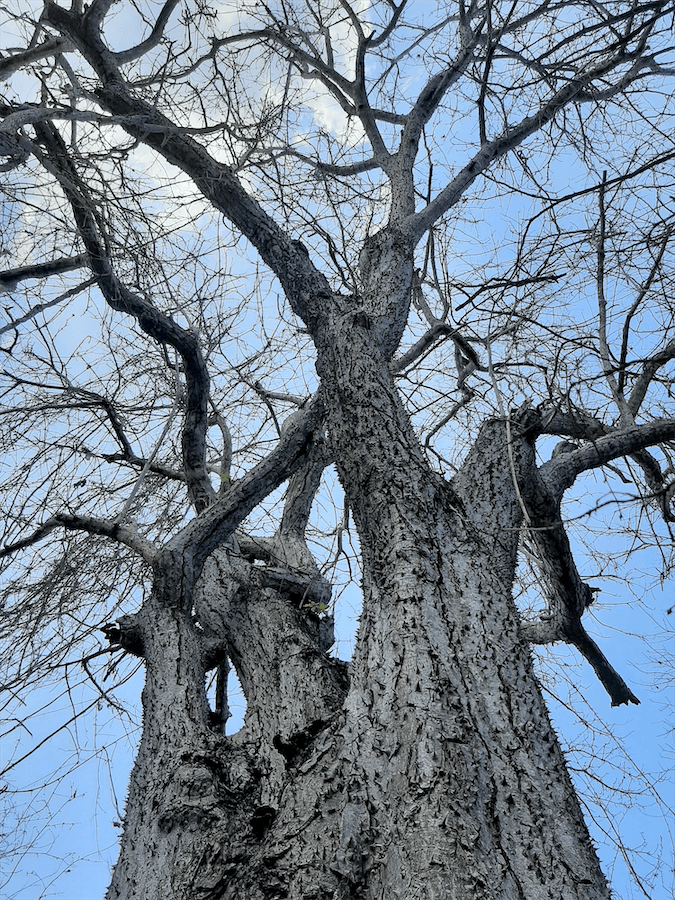
The pochote tree is a robust and untamable tree found in regions of the country with a dry and very hot season lasting over 4 months, such as the Pacific slope and the western Central Valley. It is distinguished by its thick bark covered by a formidable armor of sharp, gray thorns that often connect in a chain, resembling a saw.
Since colonial times, early farmers discovered that by cutting and planting the branches and trunks of the pochote, they would quickly develop roots and form new trees. This characteristic has been exploited to this day for the construction of strong and massive live fences.
Pochote wood is fine, soft, with an attractive pink color, and has excellent properties for construction, furniture-making, and general carpentry. Unlike many woods, it never deforms or cracks over time as it retains its natural internal moisture.
The tree is predominantly deciduous, losing all its leaves at the beginning of the dry and hot season, remaining bare for several months until the start of the first rains, at which point it displays its striking white flowers that attract bees, insects, and insectivorous birds.