
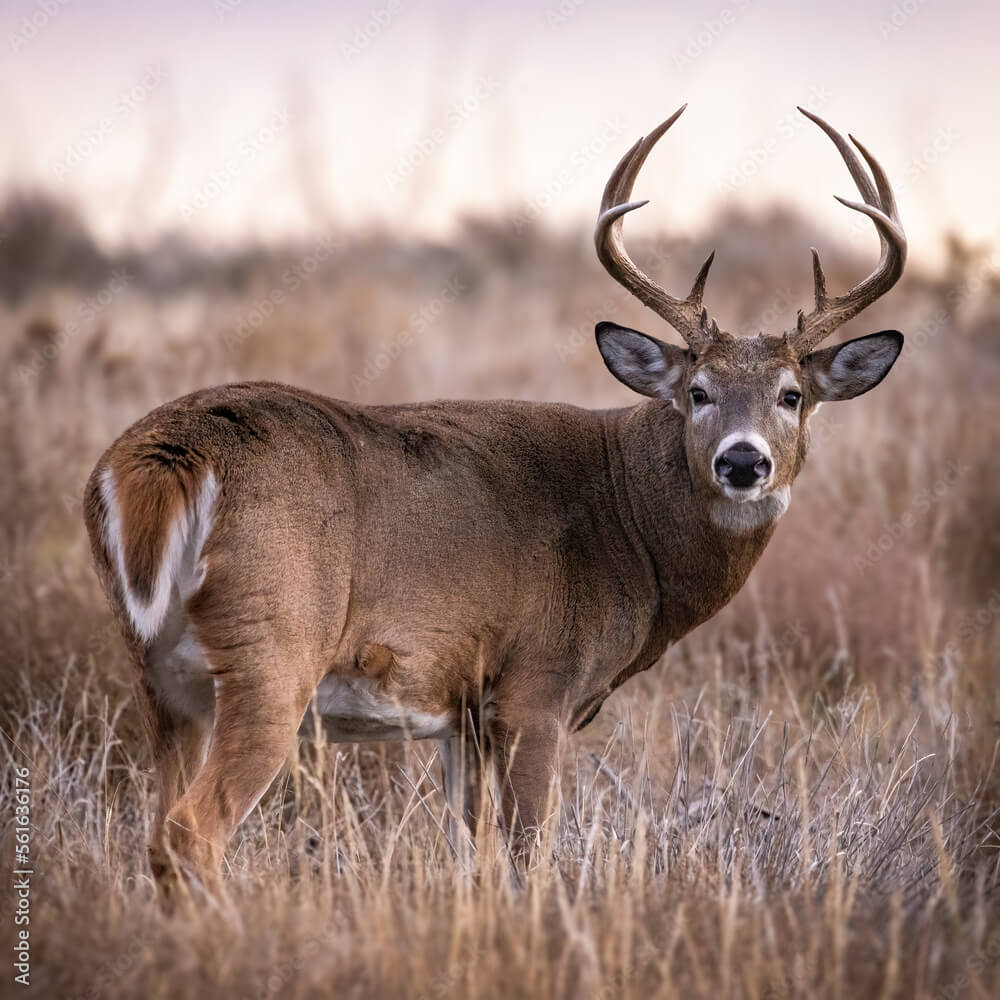
The white-tailed deer (Odocoileus virginianus) is a medium-sized animal with a slender build and long legs. Its dorsal fur varies from brownish-gray to orange, while the belly, the underside of the thighs, the chest, and the throat are white. The forehead is dark brown, the ears are relatively long and narrow, and the antlers, which are curved and forked, are present only in males.
In Costa Rica, the white-tailed deer is difficult to spot and is endangered due to illegal hunting for its meat or as a trophy and habitat loss from urban development. Its main natural predators include the coyote (Canis latrans), the jaguar (Panthera onca), and the puma (Felis concolor).
Its diet includes young branches, leaves, and fruits from various species such as poró poró (Cochlospermum vitifolium), jocote (Spondias mombin, Spondias purpurea), seeds, oak acorns (Quercus oleoides), Panama tree (Sterculia apetala), nance (Byrsonima crassifolia), and guácimo (Guazuma ulmifolia).
It can be found from sea level up to the Pacific slope mountains and on the foothills of the Caribbean slope, although much of its forests have been destroyed. Its altitudinal range reaches at least 1,300 m.