
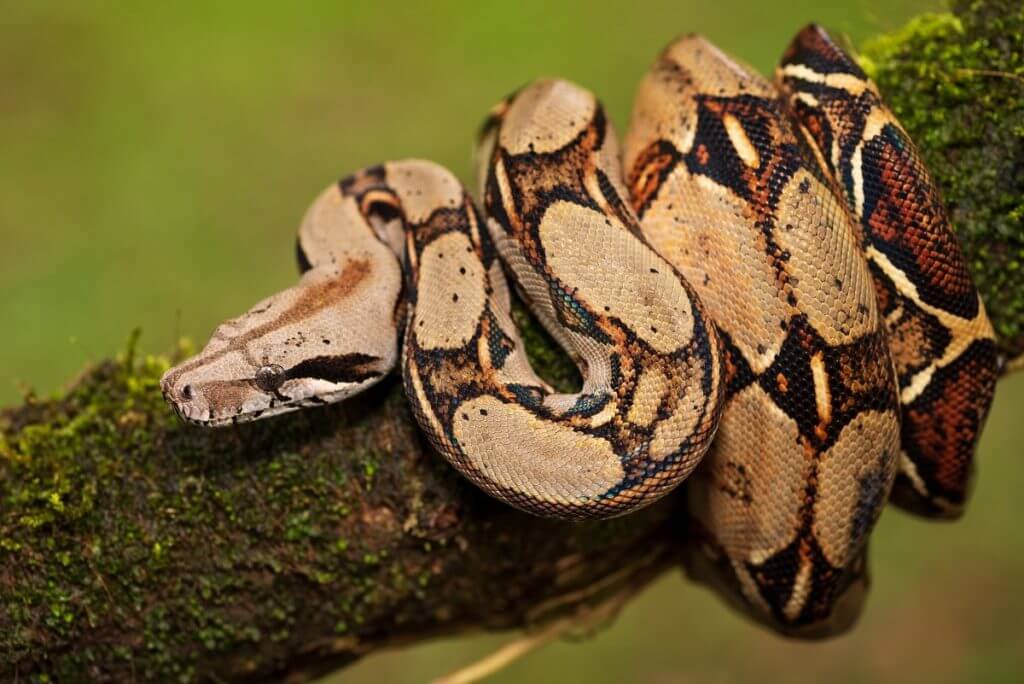
The Boa imperator, also known by various names depending on the region, is called "Bécquer" in Costa Rica, "Mazacuata" or "Limacoa" in Mexico, and "Boa Matacaballo" or simply "Matacaballo" in several areas of South America. While some refer to it as "Common Boa" or even "Boa constrictor," it is important to clarify that the latter designation refers to a different species that inhabits South America.
The genus name, Boa, comes from Latin and means "ox," probably referring to the large size of these snakes. Some scholars also suggest that it could allude to the idea of "killer of oxen." Its specific name, imperator, translates directly as "Emperor," highlighting the majestic presence of this species.
As for its common name "Bécquer," its origin is not entirely clear. Some theories indicate that it could come from the Spanish surname "Bécquer," while others suggest that it may derive from an indigenous word, just like the term "Mazacuata," which comes from the Nahuatl "mazacoatl," meaning "snake-deer."
The Boa imperator is characterized by having a cylindrical and robust body, with a large and well-defined head. Like all boas, it uses constriction to capture and suffocate its prey, tightly coiling around them until causing their death. Despite its size, it is not venomous and poses a threat only to its natural prey, such as small mammals, birds, and reptiles.